Showing posts with label Venezuela. Show all posts

Sunday, August 2, 2015

Los Saqueos de San Felix

Venezuela (Mar 17, 2006)

On April 11, 1817 the Second Republic of Venezuela was at a decisive point in its fight against the Spanish oppressor. Manuel Piar, the only general of mixed ancestry in the young rebel's army, was finally confronting the Spanish brigadier La Torres leading the larger loyalist army. The battle, fought in the plane of Chirica near the town of San Felix, only lasted half an hour. During that short time the outnumbered and untrained infantry of Piar managed to route the Spaniard forces, and thus secure the freedom of the province of Guyana from the colonial rule. Piar itself, however, didn't live long to reap the benefits of his hard won victory: faithful to the end to his black and indian soldiers, he demanded equal political and social rights for the colored population of Venezuela, dominated by the white oligarchy of european descent. He was accused of treason and executed by a firing squad in front of the Cathedral of Angostura (present day's Ciudad Bolivar). The libertador himself, Simon Bolivar, was behind the order to terminate Piar's life, in his mind a necessary act to prevent the feared black insurrection against the white rule. Upon hearing the shots that ended the life of his former companion, Bolivar is rumored to have said: "He derramado mi sangre" (I shed my own blood).

Venezuela
San Felix, today, is part of the larger Ciudad Guayana, the largest city of the Bolivar state in the vast virgin south of the country. It is a land rich of natural resources: primarily mines of iron and bauxite (aluminum), but also vast hydroelectric resources captured by huge dams on the Orinoco river. The area of Ciudad Guayana, a "planned city" built with the aid of architects from MIT and Harvard, is the hotspot of Venezuelan heavy industry. San Felix and Puerto Ordaz, on the two sides of the Orinoco River, are the historical and modern centers of this city with over 1 million inhabitants. A worker's city, where in better times most of the population was employed in the manufacturing industry that made Venezuela one of the most economically advanced countries in latin America.

A "buseta" in Venezuela
It is in San Felix that, on July 31st of 2015, at 5 in the morning, the most recent of Venezuelan riots happened. The occasion was the increase in the cost of a bus ticket, from the 10 Bolivars set by the government (1.6 US dollars at the official exchange rate, but less than 15 cents at the actual market value) to the 50 Bolivars charged by the driver attempting to make an actual living wage out of his job. The riot rapidly propagated to nearby stores, looted in search of precious items such as corn flour, a bathroom sink and some clothes. By the time the National Guard was called, the whole neighborhood was in a state of chaos. Firearms were shot: a 21 years-old boy met the end of his life when his chest was hit by a rogue bullet. By the end of the day eighty protesters were arrested, and four stores were looted in the Avenue named after Manuel Piar himself. In today's Venezuela the looting in San Felix would be unremarkable, if it wasn't that for the first time this kind of social unrest happened in a region that is at the core of Venezuelan working class. Despite the claims of authorities, the crowd that rebelled in San Felix has nothing to do with the right-wing opposition that had been promoting last year's revolts in the border state of Tachira. The people rioting and looting in Guyana were prompted by their own desperation for the unsustainable chronic scarcity that has been afflicting the country. The troubles in San Felix could be the first sign that the Venezuelan Government may be losing the core support it has so far enjoyed from the popular classes. Violent changes may be coming to Venezuela, and there is no guarantees that the outcome will be a peaceful and democratic society.

Venezuela (Mar 17, 2006)

Tuesday, February 25, 2014

The Fog of War

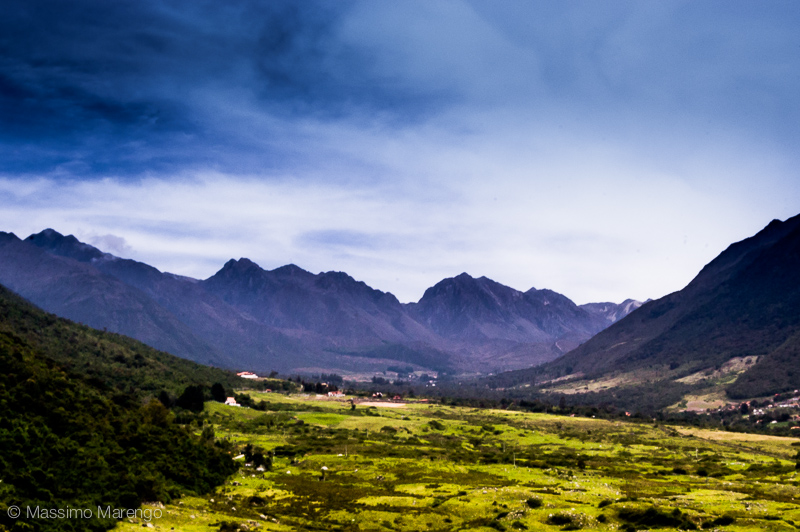
Laguna de Mucubají, Merida, Venezuela (December 18, 2010)

I recently posted on Google+ the link to an article by The Guardian's journalist Rory Carroll about the situation in Venezuela. The piece, in my opinion, is a fair account of what is happening in the country. I received a couple of comments from +Bill Stender on Google+ with links to articles on venezuelanalysis.com and counterpunch.org that offer a rebuttal to what is stated in The Guardian. I would like to thank him for the links. I think they contribute to the discussion. I however also think that talking about Venezuela from a purely geopolitic perspective can easily lead to missing important aspects of what is happening, which I believe is what the Guardian journalist is pointing out.

I have been following the situation for many years. My wife is Venezuelan, and her family has been squarely divided between "chavistas" and "opposition", as just about every family in Venezuela. Over the years I have been able to verify first hand how the social policies of the "bolivarian revolution" have significantly improved the standard of life of the majority of the Venezuelan population. This is the same people that the previous neoliberal governments had criminally neglected. Programs like barrio adentro and misión Robinson had a huge effect on health and the literacy in Venezuela. The program of microcredits directed to women, lauded by the UN, has lifted many families out of poverty. These programs are essential, and paying for them with oil money is the right thing to do.

I also agree that the opposition in Venezuela has his part of the blame, and not a small one, in how the country got to be what now is. Two coups in 2002 (inspired by CIA and Opus Dei, yes), refusal to participate to the democratic process in the following years and most importantly the lack of acknowledgement for the needs and aspirations of the majority of Venezuelans are not the hallmark of democracy. Calling for the outright dismissal of Venezuela's president Maduro is plain stupid, not democratic, and again ignores the existence of vast support he still enjoys by at least half of Venezuelans.

Both Venezuela Analysis and Couterpunch are however wrong in describing the current situation purely in terms of a US-led conspiracy. They see the accomplishments of the Venezuelan government through glasses that are way too rose-colored. The Venezuelan government has serious faults of its own for the situation to degenerate to this point.

Let's start with the economic situation. The currency control policies that the government has implemented are pure folly. One thing is to be against neoliberal market economy, and another is refusing to believe that a market exist. It is like negating the existence of the force of gravity: laudable intention, but sooner or later one hits the ground. By centralizing the exchange rate with an artificial rate (with the difference between the market and official values of the bolivar guaranteed by the government), it has created a terrain so ripe for corruption and abuse that the situation was bound to spiral out of control, with or without the need of an external conspiracy. People with the right connections to the agency paying for the dollars got very rich, at the expenses of the government and everybody else. Import of essential goods became impossible for the systemic delays in obtaining hard currency. This is the root cause of scarcity: the government did it to itself out of incompetency and endemic corruption. Corruption in Venezuela is clearly not a chavista invention, it has always been there; Chavez fault had been not being able (or not doing the effort) to root it out. The vision of Venezuelan economy  in Venezuela Analysis is overly optimistic (to be generous). While Venezuela doesn't have a significant national debt with respect to other governments, it has been insolvent with the private sector that has been importing goods in the country: the creditors may not have the recourse to appeal to the IMF, but they can stop importing goods in Venezuela. Hence the scarcity in the near future will became worse, not better, without any need of "acaparramientos" by dishonest merchants. And no, president Maduro didn't solve the issue of high inflation by lowering the price by decree: that was just demagogy and only helped emptying the stores faster.

Then there is the issue of the insecurity. Venezuela has always been a dangerous country, but I can tell from direct experience that the situation has gotten steadily worse year after year, even in areas that have been traditionally safer (e.g. the Andes). I could write many stories I have direct experience with, through my wife's family and friends, but this would take too much space in this post. I still don't understand why Chavez, with all his charisma, never tried to address the security issue. This violence is something affecting all Venezuelan. But while the higher classes can defend themselves with security guards and "alcabalas" at the entrance of their gated communities, this is not an option for the people living in the barrios. The collectivos may present themselves as the defenders of the socialist order in the popular areas, but in fact they act as criminal gangs imposing a mafia order upon their territory. The fatality rate in Venezuela has became similar to the one of a war zone, or of a failed state like Somalia after the collapse of Siad Barre. Why the government never acknowledged this as a major issue defies me: I recall a Venezuelan interior minister declaring that the violence is affecting only the gang members because they are just shooting each other. A similar attitude is criminal because it trivializes a serious issue that affects mostly the government's own supporters: stability and security are necessary to break the chain of poverty, and are sorely missing in Venezuela.

This bring us to the issue of the violence related to the current protests in Venezuela. As I mentioned in a previous post, student demonstrations have always been far from pacific sit-ins in the spirit of Gandhi's tradition. The confrontations with the security forces have however never before escalated to the level of repression demonstrated during this last week. It is not true that the government has demonstrated restrain: this morning the chavista governor of Táchira (the state where the student protests started) went on radio [audio in spanish] asking forgiveness for the violence perpetuated by the national guard, and made a point in asking the Caracas government to recognize that the scarcity in his state is a real problem, and that there are systemic issues in the exchange policy promoted by the government (which he described in economic terms similar to what I wrote above). The national guard is directly responsible for the death of demonstrators: the last victim was Geraldine Moreno, a 23 years old student that died after she was shot at close range in the face with rubber bullets by the guard in Valencia. There are plenty of videos showing the guard gratuitously destroying cars in middle class neighbors and shooting tear gas inside their apartments. There are documented abuses against the students arrested by the guard, including torture and rape. Despite those abuses, it is however not the national guard that is of major concern in Venezuela. The main problem are the paramilitary forces (motorizados, colectivos, tupamaros) that have free hands in terrorizing middle class neighborhoods at night. There is no evidence that these forces (as claimed in the venezuelanalysis article) are provocateurs sent by the opposition: on the contrary is not a mystery for anybody in Venezuela that these same gangs have direct ties with certain elements very close to the government. Chavez himself explicitly acknowledged in several occasions that these groups have been armed by the government as a safeguard of the bolivarian revolution. A government that condones violence against part of its population puts itself outside the principles of democracy, and is a shame for the ideals of socialism.

In summary, dismissing what is happening today in Venezuela as yet another imperialist conspiracy and stating that the violence is entirely promoted by an undemocratic opposition is very irresponsible. It would ignore the struggle of the Venezuelan people of all ideological colors, caused by systemic faults in a government that tolerates an unsustainable level of corruption, suicidal economic policies and a culture of violence that was never addressed and is now getting out of hand. The opposition has its faults too, but until both sides recognize the existence of each other as the legitimate representatives of a significant part of the Venezuelan population, there will be no progress, and the country will keep steadily marching toward the cliff.

Fog over the Andes, Venezuela (December 30, 2007)


Saturday, February 22, 2014

Venezuela is Burning

Mucuchies, Mérida, Venezuela (March 18, 2006)

Venezuela has some of the best beaches in the whole Caribbean sea, as well as outer-worldly island-mountains surrounded by the greenest rainforest. It is in the Andes in the west of the country, however, where I feel more at ease. Maybe because I came from a mountain region myself, and there is an affinity of character that comes with geography. Gente di montagna, as we say in Italy.

Mayli's family also comes from the mountains. Her grandfather was born in Santa Lucia de Mucuchies, the "Place of the Moon" in the ancient language of the indigenous people living in the area. Mucuchies is a small town at 3,000 meters elevation along the carrettera del Páramo, the road that from Mérida de los Andes leads to the vast plains in the east after crossing high mountain passes. From Mérida is Mayli's grandmother, of the family that 150 years ago gave the city its most famous historian, chronicler of the disappearing ways of the Andes and collector of indigenous tales and legends. The same scholar that refused to serve in the government of the caudillo of his times, because he didn't want to have anything to do with tyranny. The Andean region is centered on the states of Mérida, Táchira and Trujillo, and provides the western border of the country with Colombia. It is also the center of the current revolt against the government in Caracas.

The revolt was sparked in San Cristobal, the capital of Táchira, when a young woman was raped in the campus of the local university. The students protested, as that was just the latest episode of a growing insecurity that is affecting everybody in the country. Students protests have always been common in Venezuela: the students take the streets, burn tires and block the traffic, throw rocks and incendiary bottles at the police, which responds with fire hydrants and tear gas. After a few hours both sides are satisfied to have made their point, and go home for dinner. I have seen that happening many times since I first visited the country: this is the Venezuelan equivalent of a peaceful protest. What was different this time was the reaction of the security forces: the students were rounded up, some arrested, abused and transported to a prison in a different state. This was unprecedented and generated more protests. It was the spark that ignited the rage in the general population of the andean region.

The Andes give way to the Llanos
The population of the Venezuelan Andes has a reputation for being quiet. Mérida is seen as an intellectual center, a city of culture and studies, and revolts in Venezuela do not usually start in the Andes. The situation this time was however ripe to explode. Years of economic anarchy in the country, triggered by ill advised government policies and widespread corruption, have driven to the ground internal production and raised insurmountable obstacles to the import of foreign goods.  This has led to the scarcity of essential products, including basic food and everyday items. This scarcity has been felt mostly in the andean region, the border with Colombia, where the government has further restricted shipments of goods in the fear that they would be smuggled to the other side of the border. Furthermore, the government knows well that scarcity in Caracas would mean a much bigger problem that in the smaller towns in the countryside: the province has been suffering to keep the capital well fed. You can still find, for example, toilet paper in Caracas; an item that in the Andes has disappeared since months. Mayli's father, that lives in the capital, tried to ship a few rolls outside the city: the shipment was refused by all postal couriers, under government decree. The student protests, first in San Cristobal, in Mérida next, found fertile ground in the exasperation of a general population that felt forgotten by a central government seen as distant, incompetent and corrupt. This brought the people to the street, joining the student protests, and inviting an even stronger reaction by the security forces (with national guard units, and their tanks, sent to San Cristobal to quell the revolt).

Is this a repeat of the 2002 coup attempts, during which a coalition of the financial elites, the Church and foreign agencies (the CIA) tried (and almost succeeded) to topple the Chavez government and install a neoliberal dictatorship? It is not. For once, today's protests have penetrated the Venezuelan society deeper into lower income strata. The insecurity, criminality and shortages that the government in Caracas is unable to address are affecting everybody, especially the population of the slums, which cannot pay security guards to keep away the bands of thugs that are terrorizing the population, unchecked. This has dramatically cut the chavista support even in its traditional, hard-core constituents: the government is well aware of this issue, and this could explain the unusually strong response to the protests, aimed to nip them in the bud. At the time of the 2002 pre-coup opposition marches, the division between opposition and government supporters was much more clear, along the line of income and ethnic background (even in a country that prides itself as the idealized melting pot, economic class is still strongly correlated with the amount of skin pigmentation). This line is blurred in today's protests, as the unrest is propagating to poor neighborhoods in Caracas that are suffering levels of chronic street violence much worse than the andean cities.

The second difference with the events in 2002 is that the current protests started spontaneously, and were joined only later by some opposition leaders. The arrest of Leopoldo Lopez that gave himself up to the police, surrounded by the sea of his supporters in Caracas' central square, has been widely shown by the international media. Lopez however joined the protests only after the streets of San Cristobal were on fire, and his very public arrest was an ill-advised move by a government that gains nothing by creating martyrs in the opposition side. The 2002 marches were called by a much stronger and organized opposition that could count on powerful privately-owned media and entrenched allies in the security forces and the army. Nothing of this is still true today: the opposition parties have lost all political power and are divided; the armed forces have been purged; the private media have been closed down or otherwise neutralized.

The last difference is that the government has been preparing for years to avoid a repeat of the 2002 coup. The government has been quietly arming bands of supporters organized in paramilitary units that enjoy almost sovereign power in areas of the Venezuelan cities where the police and national guard would never dare to set foot. Colectivos, motorizados, tupamaros, they have different names but one common characteristic: they control their urban territory with the brute force of gang violence.  Since the beginning of the anti-government demonstrations these hordes have been unleashed to quell the protests. They attack middle-class neighborhoods at night, enter their buildings setting apartments on fire and smashing the cars parked in their garages. They have established a reign of terror aimed to suppress the will of the protesters. This is happening while the national guard stands by, or helps by shooting tear gas canisters through the windows of private apartments. Despite all this, the protests continue. As a former chavista supporter, of working class extraction, declared to The Guardian in the article linked above, "I am scared, but I am also scared of violence on a daily basis" (he said referring to the multiple robberies he has suffered), and "I am sick of not imagining a better future".

As the public's attention is focused on another tragedy unfolding half a world apart in Ukraine, Venezuela is burning. I am not referring to the fires lit by the demonstrators, or the middle-class apartments set ablaze by the tupamaros. I am referring to the internal hate that is consuming the soul of a divided people. Venezuela today's demonstrators are fed up by the level of degradation in the society, the bread lines and the constant brownouts, and more importantly by an ever rising level of insecurity that makes you risk your life every time you dare to set foot in the street. Government supporters still believe in Chavez promises and are ready to defend at all costs the real gains in their standard of life that resulted from the "bolivarian revolution" social policies. Each side is blind to the reasons of their opponents, and doesn't acknowledge that the problems of a country so divided could only be solved through dialog. It is not going to end well.

Valencia, Venezuela (December 30, 2007)

Saturday, February 15, 2014

Storm Approaching in Venezuela

Laguna de Mucubají, Merida, Venezuela (December 18, 2010)

A storm is gathering at the feet of the Andes. It has been brewing for years. El Comandante kept the lid on the pressure cooker, enchanting el pueblo with his mesmerizing words, but the steam had been building up. Now that he is no more,  the valve is broken and the country is bound to deflagrate. 

I am talking of Venezuela, of course, and the storm that is brewing has nothing to do with the thunderclouds that brought us rain during my last visit at the Kettle Mucubají in 2010 (large photo above). I am referring to the government policies that have transformed Venezuela into a failed state, with a broken social texture and a tanked economy. Being an oil-rich country, Venezuela does not have any reason to be on the verge of financial collapse. Yet, traditional high level of corruption and misuse of government funds have prevented the country from creating the necessary infrastructure that would have lifted the lower classes from the bounds of poverty, and developed the local economy beyond the oil export. The great hope was the raise to power of Hugo Chavez, a left-leaning populist that introduced reforms and economic aids aimed to alleviate the isolation and disadvantage of the Venezuelan poor: free clinics, schools, house development projects, basic food at subsidized prize. These reforms did have a real effect in reducing poverty and illiteracy in the country, despite the opposition of the middle and higher classes, that felt excluded by the action of the government. This created a very polarized situation in Venezuela, pitting the poor majority against the minority middle class and the elites. In 2002 the situation exploded, with a CIA-backed failed coup against Chavez, followed by a strong reaction from the government that successfully managed to marginalize the opposition, politically and economically. As a result of this process Chavez assumed full control of the nationalized oil company, and its revenues. This was the beginning of the end of the democratic "bolivarian" revolution started by Chavez (so called after Venezuela's independence hero Simon Bolivar), and its transition towards a paranoid kleptocracy with unparalleled heights of corruptions.

The calm before the storm
The main engine of corruption, of course, is the state oil company. Traditionally managed as an independent company, after the 2002 events has been converted into the cash cow for Chavez's party, with all revenues siphoned into black-box companies with unpublished books. It has been estimated that with this mechanism Chavez managed to stash away over 100 billion dollars, which have then been used to buy votes through populist projects (e.g. free refrigerators for all eligible Venezuelan just before elections) and to fatten the pockets of government officials (the so-called "boliburguesia"). A second engine of corruption is the exchange control, also instituted after the 2002 coup to prevent the flight of capitals and protect the Venezuelan economy from real or perceived foreign (US) economic sabotage. By fixing the exchange rate of the bolivar with respect to the dollar, the Venezuelan government found itself in the quandary of having to subsidize each and every currency transaction, by paying the difference between the official rate and the actual market value of the currency. As inflation grew to the current 56% annual rate, this mechanism became unsustainable. Foreign companies doing business in Venezuela found themselves unable to get paid in real dollars, and stopped importing into the country. This is the root cause for the extreme shortages that have brought the situation in the country to the point of breakage.

You have to remember that the economy of Venezuela is totally dependent on oil export and import of everything else. The country is not even self-sufficient in terms of its food needs. Stopping food imports in Venezuela would mean famine: some analysis predict that Venezuela will soon default on its currency exchange scheme, after which it will be unable to keep importing basic food needs. These is the perfect storm that is approaching in Venezuela as I am publishing this post.

It has in fact already started to rain. On one side the middle class, exasperated by the soviet-kind lines that are now necessary to buy everything from corn meal to toilet paper, is filling the streets banging pots in protest against the government. On the other side the government and its assault troops, bands of bikers armed by Chavez party that are intimidating the protesters by shooting on the crowd (three deaths just yesterday, and we could hear the rioting in the street behind Mayli's mother house while we were Skyping with her the other day). The government has also emitted an arrest order against an opposition leader, Leopoldo Lopez, under the charges of murder and terrorism, and is blocking part of Twitter. It won't be long before the start of the storm.

Strada del Paramo, Merida, Venezuela (December 18, 2010)

Sunday, October 20, 2013

Farewell to Venezuela

La Guaira, Venezuela (Dec 29. 2004)

--- Originally published on December 29, 2004 ---

The last day has finally arrived. We had packed everything the night before, and at 6:30 AM we were ready for the radio taxi we had reserved to go to the airport of Caracas in La Guaira (photo, from the airplane). Getting a taxi in Caracas can be an interesting experience. The easy and expensive way is to call a radio-taxi. They arrive at your house with large black SUV, and you are taken where you want to go without troubles in an aseptic vehicle with darkened windows and air conditioning that physically isolates you from the world outside (the highway passes in the middle of the "ranchitos" of Caracas, see photo below). For all appearances, you may as well be in New York. This kind of transportation is useful if you have to go to the airport early in the morning, because you are sure to have the taxi waiting for you at the requested hour. The 30-40 min trip to the airport from Caracas costs 40,000 bolivares which is about $20 at the official rate, ok for us but quite expensive for the average venezuelan.

There are of course other options. The more affordable other way is walk down to the closest taxi station or stop a taxi in the street (taxis in Caracas do stop, like in New York, and differently from Boston). The only problem is that you need to figure out if you the driver can be trusted or not. Things are usually ok if the taxi has some “official” sign, but most of the taxis are now living in a semi-legal status after a liberalization promoted by the government. Many of the taxi drivers do not have a license, they put a fake TAXI sign on the top of their patched cars and start driving around (instant taxi!). For the taxis hired in the street it is advisable to ask beforehand the price of the ride, to avoid being ripped off. We had taken such a taxi a couple of times, like when we went to the Universidad Simon Bolivar for the second day of Mayli’s conference, paying a few thousand bolivares for a ride that had costed Mayli many times more the day before with an “official” black SUV taxi.

Anyway, the ride was smooth and we arrived at the airport in time,checked-in, pass through the first of the many security checks of the day, and soon we were on our way to Miami. In Miami we had the first disappointment of our return to the US: we couldn’t find a decent place to have lunch in the gate areas, and we had to resort to a Pizza Uno. Ugh, welcome back to the famous US cuisine.

The second (expected) disappointment was when landing to Boston (with one hour delay because the plane cleaning crew in Miami didn’t show up in time): everything was covered by a white mantle of snow. This was expected because we received the city email snow advisory, but the hard reality of returning to winter after 20 days of summer still hit us hard.

Once at home we had the final blow: as a consequence of the snow emergency declared by the city, we got three fines for a total of $90, because of parking on the wrong side of the road, and not moving the snow-submerged car within 48 hours. So we spent the first hour back home shoveling the snow to avoid getting more 48 hours fines... Welcome Back to Boston!

This is the last post of my Venezuelan diary. It was quite an effort keeping up with the posting while traveling, but I did enjoy fixing my thoughts and travel impressions at the end of each day. And it also forced me to start screening my photos right away, rather than leaving them for weeks after returning from a trip. I hope you also enjoyed the reading and the photos as much as I liked posting them. In the next few days I’ll resume the regular posting of the blog: I took several hundred pictures during this trip, from the beaches of Los Roques to the mountains of Merida; many of them are just crap, but there will be some worthy to be published, and I’ll post them in the weeks to come.


--- Updates (October 20, 2013) ---

This was the last post of my 2004 Venezuelan travel diary. I remember it being quite an effort, keeping up with posting while traveling, but it was also a good exercise rethinking all that happened at the end of each day. It also forced me to start screening my photos right away, rather than leaving them untouched for weeks after returning from a trip, which is what I usually do. Much has changed since 2004. Chavez is gone, but the Chavismo is still alive. The years of innocence, when Venezuela was the darling of the international left, have been replaced by the harsh reality of yet another corrupt, incompetent and populist government using ideology as an excuse to maintain its power. The open question is now for how long the little chavistas that have replaced Chavez will manage to keep their hold on power, now that "El Comandante" and his enormous charisma are gone forever.

Thanks for reading this far. If you happened to hit this page and want to know what is this all about, you can jump to the beginning of my Venezuela travel diary HERE. You may also enjoy my other travel diary published here: the Japan travel diary.

Ranchitos de Caracas (December 28, 2004)


Saturday, October 19, 2013

Back to Caracas

Merida, Venezuela (Dec 28, 2004)

--- Originally published on December 28, 2004 ---

Merida, Venezuela (Dec 28, 2004)
Inevitably, our vacations are getting to their end. This morning we left Merida directed to Caracas, where we will stay for just one day before flying back to freezing Boston. We flew again with one of the small propeller planes that serve the route between Merida and Caracas. These planes actually land in the Merida airport. Landing in Merida is quite an experience. The city is on a valley between very high mountains (the Pico Bolivar is over 5,000m), and the airport is right in the middle of the city. Until a few years ago large jets were authorized to land, but only especially trained pilots were able to do the frightening maneuver of diving through the peaks and stopping on the short runway (the runway is really short, to the point that the bakery near the airport had to pull down its shutters at the time of the daily jet flight). Now only small planes are authorized to land, and the situation has somewhat improved, even though the landing stage can still provide quite an adrenaline rush, and the probability of getting in town the same day as your luggage are slim. Despite the clouds and being again seated on the same side of the sun, we were treated by a wonderful view and I was able to do a few nice shots, like the one above. We will spend the night in caracas, and tomorrow morning we will suffer another early wake up to get back to the airport for our return flight to the US. This time we didn't lose our luggage, which is good given that we would have had otherwise to arrive in Boston with our summer clothes on.


--- Updates (October 18, 2013) ---

As mentioned in this other post, the airport in Merida is closed due to a fatal accident, and is now necessary to fly to El Vigia, a very inconvenient airport down in the plain.


--- Updates (October 20, 2013) ---

David left this comment on Facebook:

"Es bastante increible lo pertinente de esta foto: Estoy 95% seguro q esas lagunas las conocimos Javier y yo la única vez q acampamos juntos... Nos quedamos al lado de la más grande, la del medio. Se llega subiendo por la Musuy, y una de ellas se llama La Carbonera... nunca había llegado a ver esta foto.. Espectacular!!!"

It turns out I have a couple other photographs taken about at the same time from the plane, that show the lakes in more details, and the nearby area. I am adding them here.


Wednesday, October 16, 2013

Despidiendose...

Alejandro and Anabela, Merida, Venezuela (Dec 27, 2004)

This is possibly the post where I have changed more my position since 2004. If you get upset by reading the first part, read on to the updates.

--- Originally published on December 27, 2004 ---

Anabela and Roxana
We spent our last day in Merida at la Finca, where we had lunch, to say goodbye to Mayli’s grandmother. There, we found some of Mayli little cousins, among which Alejandro and Anabela (in the photo above) and Roxana (right, in the photo on the right). When I proposed a photo session they were initially shy. Once started, however, they didn't want to stop and started fighting to be in front of the camera. I filled one full 512MB card (50 photos) just with them posing and and playing on the swing. We then went to the Merida market, which is the combination of a farmer’s market with little shops selling local artisan craft. Mayli’s mother wanted to give me a T-shirt as a present, but we couldn't find any I liked, so we got a very nice “gres” cup which I can use in my office tea. We also got two small T-shirts for Alice and Mililla (Letizia), my baby nieces in Italy.

Back at Mayli’s mother's home we listened to some stories about the ongoing land reform from Mayli’s father. He had recently met a cousin unhappy with the government and the way the reform is implemented. As many other south american countries, Venezuela suffers the problem of the best land being owned by a handful of families and multinational corporations, who use their extensive land holdings to raise cattle for meat export (this is one of the root causes for Venezuela dependence on food import, as the best land is used for foraging and is lost for farming). In many cases legal ownership titles of these holdings do not exists, as these lands have been accumulated during the turbulent historic processes leading to Venezuela independence and subsequent civil wars, at the expenses of displaced indigenous populations and small farmers. These violent processes have strongly contributed to the creation of the the huge slums crowning Venezuelan large cities.

Attempts to reform the situation have been made by successive governments during the 40 years of Venezuelan democracy, but have never succeeded to seriously dent the problem. Land distributed to would-be farmers without proper training and resources have been left unused, ultimately sold back to the same large landowners, while the would-be-farmers returned to the city, exacerbating the problem. The current government is trying to reverse the trend with a new reform, aimed to limit the maximum size of land holdings by purchasing or expropriating unused land from large owners, and then assigning small parcels to cooperatives of farmers trained in professional schools part of the “misiones” program, and granting them loans to purchase equipment and seeds.

The problems with this scheme is that the legal process for the expropriations is lengthy, and so far not many parcels have been assigned. This situation has triggered spontaneous occupation of land by landless peasants, at the expenses of the large landowners, resulting in some cases in a violent and deadly conflict.

After the last elections, emboldened governors of rural areas from the president’s party have decided to push forward the process by promulgating local decrees facilitating the process of expropriation, with the idea of forcing large landowners to negotiate a settlement. Among such governors is the re-elected governor of the state of Cojedes. In Cojedes, a dozen families and one british corporation own most of the land. The case of the british corporation is emblematic, as 90% of its land has been occupied by peasants that, without a legal title, are unable to cultivate the occupied land and cannot be included in the government program.

This initiative has naturally sparked yet another national controversy with the opposition press, accusing the government of communist measures by not respecting the land owners rights. Chavez himself had to release a communicate, just before a state trip to China, saying that the government has no intention of abolishing the private property, adding that: “Is communism the alternative? No! It is not pursued right now, as our reference point is the bolivarian Constitution of the state, and our social economic model. We are not proposing to eliminate the private property. We are not proposing this extreme. Nobody knows what will happen in the future, but in this moment it would be madness”. Is impossible to say if in the future Venezuela will become a communist country, but despite what the opposition claims, the current policies of the president Chavez are far from being totalitarian. The social programs so far are very respectful of individual freedoms, and the economic policies are not much different from the ones of the current governments of Brazil or Argentina. They have been lauded by international organizations as the International Monetary Fund and the international press like the Wall Street Journal, which are not exactly communist entities.


--- Updates (October 16, 2013) ---

In 2004 Chavez could still claim that Venezuela was not headed towards a socialist economic model, but he gradually reversed its course. The change was codified just two years later, when in 2006 he tried to change the constitution to decisively shift the country towards a more socialist model. The constitutional changes were defeated at the polls, but many of the provisions were later implemented, piecewise, by the National Assembly as part of common laws.

The main effect of the land reform initiated by Chavez has been the destruction of the agricultural production in the country, which is one of the root causes for the scarcity of common foodstuff plaguing Venezuela (the other being the exchange control, that limits the availability of foreign currency necessary to import products which are not produced locally anymore). As in the previous attempts of reform, the expropriations have not been followed by a return to production, resulting once again in the replacement of productive farms with unproductive land. The consequence of the reform have been similar to the "fast track" reform disastrously applied in Zimbabwe in 2000.

Another component of the disaster had been the nationalization of the industry providing agricultural services (seeds, fertilizers and credit) to the sector, primarily a company called Agroisleña. The result of the expropriations had been once again the destruction of the industry. One of Mayli's cousins told us the story of some land he own, that he has rented to local farmers for potato cultivation. Potatoes grow extremely well in Merida, and after the first year the yield was so large that he proposed the farmers to rent more land to increase production. He was answered that while they would liked to rent more land, it was impossible for them to increase production, because the nationalized seed company was only providing a limited amount of seeds to each farmer, due to seeds scarcity in the country, and the impossibility to import them from abroad.

This state of affairs is however not just due to incompetence, but also to corruption. The emblematic case of land reform gone horribly bad in Venezuela is the one of Franklin Brito. Brito was a biologist and agricultural producer in the Venezuelan state of Bolivar. In 2002 he submitted a project to the state-owned Corporation Venezolana de Guayana (CVG) to combat a disease affecting the yum plantations in the region. The project was however in conflict with another proposal submitted by the town Mayor, member of the Chavista party. When the project of the mayor, after allegations of misappropriations, was rejected, Brito was fired from his post at the local agricultural institute, as well from the secondary school where he was teaching. His wife (a teacher in another public school) was also fired. The vendetta was completed when a sizable portion of his farm was given by the national land reform agency to his neighbors. Despite several tribunal sentences in his favor, the land was never restituted, and Brito started a hunger strike. The hunger strike would ultimately lead to his death, under the watch of the military hospital in Caracas, where he was forcibly interned for "his protection". The story became a "cause celébre" in Venezuela and abroad, and a symbol of the abuses and corruption of the bolivarian government under the facade of a socialist revolution.

Sunday, October 13, 2013

La casa del arbol

Merida, Venezuela (Dec 26, 2004)

--- Originally published on December 26, 2004 ---

Today Mayli stayed home to take care of her mother, while I went to visit Alejandra at her “casa del arbol” (the house on the tree). She lives in a small little house near Merida, which is built around and on top of a tree. The tree grows from the center of the house, and exits from the roof and the windows. There even is a small natural cave in place of the "basement" of the house, nested in between the roots of the tree. We talked again a lot (Alejandra was my office-mate when I was in graduate school in Trieste), and I am very happy to be able to spend some time with her in the rare occasions that this is possible.

The “casa en el arbol” is inside the garden of a larger house, which is owned by very interesting and nice people. One of their sons was also a physicist, but left the profession to become a cook, and is now the most famous chef in Venezuela. He wasn't there today, but I still had a very good dinner, a “paella”, the spanish dish cooked by an argentinian architect of japanese origins that is working in Chile and spending his vacations here in Venezuela (he is the one in the photo above). After dinner we played with old wooden games and toy kaleidoscopes of all shapes.


--- Updates (October 12, 2013) ---

You can actually follow Sumito's blog here.

Thursday, October 10, 2013

Christmas day

Merida, Venezuela (December 23, 2004)

In case you missed the beginning of this series, this is a travel diary of our trip to Venezuela in December 2004, with updated comments reflecting the current status of the country a decade later.

--- Originally published on December 25, 2004 ---

After coming back very late on Christmas night from la Finca, we slept until late in the morning. During the day we really didn't do much, apart going to a “communication center” of the local telephone company to call my parents at a low telephone rate, and visiting some friends of us living in Tabay (photo on the left). Tabay is one of the small villages along the roads to the Paramo.

Friends in Tabay
Tabay has an interesting story. As part of the “barrio adentro” program, the government offered to place one of the cuban doctors that are organizing basic health care centers for poor neighborhoods. This is a program done in collaboration with Cuba (which provides the expertise and the actual doctors for the program, to supplement the scarcity of venezuelan doctors available to practice for a very low salary in poor neighborhoods), in exchange for oil. The deal is that the government pays the small salary of the doctor, while the community provides the location to install the little hospital. Being the mayor of Tabay affiliated to an opposition party, the offer was refused, and the local community had to organize independently from the town officials to find a suitable place. As a result, in the last elections one month ago the incumbent mayor lost his office, and now the town is governed by the pro-government mayor that organized the community to keep their cuban doctors. The “barrio adentro” program of course can only provide basic health care, and cannot substitute the need of real hospital to cure serious illness, so have been criticized as a waste of money that should instead be used to fix the problems of the proper national health care system. The recipients of the “barrio adentro” program, apparently, do not think this way and are ready to go a long way to support the initiative (how barrio adentro is effectively improving the quality of life of poor people is one of the recurring themes in Mayli’s uncle description of his life as a priest in a poor Merida neighborhood). Of course having cuban doctor is not a long term solution, but the program is gradually training doctors and paramedics from the local communities, with the aim of having a program which is self-supporting in the future. The effects of this program on the lives of poor venezuelan is however something that tends to be hidden from the daily life of the rest of the country.

After dinner, we received the visit of one of Mayli’s cousins. He was happy because he is opening a new small commercial activity in Merida, and was assured cooperation from the city officials. He said that he got it because he always maintained an equal distance between the pro- and anti-government factions during the struggles of the last few years (his philosophy is that there is no point in swimming against the current). When he went to talk to the city pro-government officials, they checked that he didn’t sign for the recall referendum against the president (the list of these signatures is public), and then said that they will be very happy to make business with him.

The large photos above and below have nothing to do with this story. I didn't take many pictures in the last few days, though, so I decided to post some more image of Merida’s mountains, this one taken a couple of days ago while driving to Mayli’s cousin restaurant on the Valle de la Culata. Despite all its social and political problems, Venezuela is a beautiful country.


--- Updates (October 9, 2013) ---

In 2006, a couple of years after this entry was originally posted, I got some heat from a commenter upset of my positive treatment of the "barrio adentro" program:

Wow. It’s amazing how deep and accurate your comments about the situation in my country are. I suppose that for an Italian guy must be very mind-easer to support a “leftist government” that “helps” poor people by giving them everything they need. This is 2006 and those humble and nice poor people you feel so sorry about are now demanding houses, cars and everything “THEIR” government promised them would be given. If not they are just going to take it... Guess who is going to be stolen.... Well, let’s see...oh yeap, that forgetful and selfish bad middle class people who are in the opposition. But it’s OK you'll see the news on the civil war sitting in a nice balcony back there in Italy drinking a hot cappuccino thinking to yourself ... “poor people”. Just to finish I really hope you have such a president like mine in your country.... Ooops, sorry you already had one like him Mussolini I think his name was.

This was my answer at the time:

Yeah, you are not the first venezuelan calling me “Intelectual de Cafetin”.

There may be a lot to say about social justice in Venezuela, and who has “stolen” from whom for many years, but this is not the point.

The point I was trying to make is that the social programs the government is making in Venezuela are hugely popular among their recipients. One can argue if these programs are the best way of developing the country, or not, but it does not change the fact that the people in the barrios like them, and feel their lives are improved because of them. As a consequence Chavez is ever more popular among a large fraction of the voters. You can call this populism, if you want, but unless the opposition understand the need of social justice coming from the lower classes, they don't stand a chance of ever getting rid of Chavez, or the Chavismo (unless, of course, they try another coup, but this seems unlikely right now).

If I were in the opposition shoes, I would try to recognize more what are the good things that the government is claiming to do (the fact that they actually deliver is a different issue) in order to focus better on the bad parts. In this same post I mention a little episode about how the signatures for the referendum have been used (and are still used) to discriminate who is getting help and business from the government. Even if it is true that similar mechanisms were existing in the previous AD-COPEI parties power-sharing era (you could do business only if you were of the right crowd), it does not make it right. It is dangerous when a “revolutionary” impetus becomes excessive to the point that that people are blacklisted for their ideas or for exercising their democratic rights.

If you want to find a comparison with the Mussolini years in Italy, this is a good point. During the “ventennio” if you didn't wear a black shirt, or if you were not subscribed to the fascist party you were out (or in some cases locked in some jail, or killed if you were making too much noise). Venezuela is nowhere near the level of brutality and totalitarianism of the fascism in Italy (try to have an opposition newspaper at the time!), but it is still a slippery slope. And there are elements within the government supporters whose zeal is dangerously reminiscent of the Mussolini epoch. That said, if I were to look for fascists in Venezuela, I would find many of them in the opposition ranks, as illustrated by the short lived measures promulgated by the smiling Carmona, that would have made Mussolini and his concept of State very proud, if he didn't end up shot and hanged upside down in Milan in 1945.

These comments are still valid, even though the situation in the country has further degenerated since 2006. The ideological absolutism of chavismo has gotten worse, and the obstacles imposed to the supporters of the opposition, reminiscent of the "proscription lists" during the Italian fascism are even more wide spread. The press (especially the TV) are more and more controlled and effectively censored by the government (newspaper to be printed need paper, and the venezuelan government retains the monopoly of newsprint paper in the country). I could go on but now, if you would excuse me, is time to get me another cappuccino.

Merida, Venezuela (December 22, 2004)


Sunday, October 6, 2013

Xmas vigil

Merida, Venezuela (December 22, 2004)

--- Originally published on December 24, 2004 ---

My family in Italy always celebrates Christmas with a lunch on December 25th. In Venezuela the important day is the Christmas vigil on December 24th. Mayli's family reunites on December 24th at her grandmother’s house (“La Finca”) to spend the vigil together and eat sancocho (chicken soup) and hallacas (hallacas explained here). Venezuela is a conservative catholic country (even though protestant evangelical churches are making serious inroads), and the church is still a powerful force in the society. As in Italy, you can find churches everywhere, even at a pass over 4,000m (12,000ft) as in the photo on the left. So Christmas is deeply felt, and in Mayli’s family is very important to be at La Finca for the Christmas hallacas.

Pico del Aguila
The whole day was in preparation to this event, with the exception of a short visit to Alejandra (one of the physicists in this photo) who had also returned to Merida, and was preparing her hallacas with some friends. I showed her the photos on this blog, and some of the comments I posted triggered a discussion about politics (about the “bolivarian process” from the point of view of university professors), unfortunately cut short because we had to leave early for la Finca.

Mayli’s family is quite large, and most of it tries to be at La Finca on Christmas night. Of course it is impossible for everybody to give presents to everybody else, and this logistic problem has been solved with the “intercambio de los regalitos”. It works like this: each person is randomly designed to get a present for another component of the family, getting in exchange a present from a third family member. This way everybody gets and receives one present. Mayli and I had two of many Mayli’s cousins as present recipients. After the intercambio we sat down for the midnight dinner, where again I was involved in a conversation about politics with one of Mayli’s uncles (again about the “bolivarian process”, but from the point of view of a priest working in a poor neighborhood).

All these talks about politics are something new. The first time I visited the country, maybe 6 or 7 years ago, nobody was talking about politics. One of the consequences of the strong polarization of venezuelan society (some say this polarization was created by the divisive attitude of the president, but I think these divisions were already present before, just hidden), is that politics is now an important issue concerning everybody. People is often wary to talk freely, because the polarization is so strong that more than one such discussion has ended with fist fights between members of the same family. Once triggered, however, people is likely to vent off their frustrations, especially with an outsider like me who is happy to listen to both sides.

To understand what is really going on in this country one would have to spend several months traveling in every corner of its territory, visiting each small village in the Andes, the flooded plains or the Amazon, or living a few months in the slums surrounding Caracas where human life is not worth less a dollar. Touching with one’s hand the situation of the 80% of the venezuelan population living below the line of poverty is probably the only way to go past the propaganda from both sides, and to form an independent idea of what it is really happening. As a tired astrophysicist visiting family during Christmas holidays, this is however not going to happen, and all I can do is to listen to middle class people seeing the situation through the lenses of their own situation, which is definitely only one side of the story. It doesn't work very well, because the segregation in Venezuelan society is very strong, and people of different classes barely talks to each other, and when they do is never on equal basis.

Differences, however, do exists. People removed from the daily lives of poor classes tends to complain that the government is not doing enough, and that the measures that are actually carried on are just populist acts which do not change the roots of underdevelopment of the country, while the corruption and inefficiency is as as rampant as ever. Other people who have instead a greater contact with the struggling lower classes generally have a more positive view of the government initiatives, and reports a significative improvement in their lives.

Who is right? Probably both, from their own point of view. Maybe it is true that all the “misiones” are just “pañitos calientes”, palliatives that won't solve the structural problems of the country. But is also true that previous governments, when the poor where rioting for food, were sending the army to shoot them down. Now the army is used to distribute food and build schools. Too little? Maybe. Better than nothing? Maybe.

Merry Christmas.


--- Updates (October 6, 2013) ---

If you want a (very limited) assessment of what 10 years of "misiones" have produced, look at the "updates" in this post. It doesn't look pretty, and the current situation vindicates who was asserting that the "misiones" would be of little significance in solving the structural problems of the country.

Certainly from the point of view of the middle class and intellectual elite of the country, Venezuela has degraded significantly in terms of services, infrastructure and development in general. Corruption may have changed color, but is more than alive. The resentment towards the ideological absolutism of the "chavistas" is fully justified, and engendered a society less open and free than before. It is not surprising that Venezuela is suffering a brain drain caused by the double punch of a deep economic crisis and a toxic atmosphere where, if you are not aligned to the ideological purism of the government party, you are out of luck.

What I cannot assess, is how the developments of these ten years have been felt by the impoverished classes, the traditional strong supporters of the government. Despite their inefficiencies, the "misiones" are still there. During the last elections (the first after Chavez's death), the government still got a lot of votes (who really won is a different issue that I don't need to discuss now), suggesting that at least for part of the population, "chavismo" is still popular despite the shortages, the brownouts and obvious evidences of government corruption. Given the current long-term unsustainability of the government "misiones", how long is this going to last?

Merida, Venezuela (December 23, 2004)


Thursday, October 3, 2013

Las cinco aguilas blancas

Pico Bolivar, Venezuela (Dec 23, 2004)

--- Originally published on December 23, 2004 ---

Today we had an invitation for a very special restaurant. Juan Antonio, one of Mayli’s cousins, is the chef of a gourmet restaurant at La Culata, one of the many beautiful valleys in Merida’s Paramo andino. 

Mayli and Juan Antonio
The restaurant had originally been a vacation house for the family, and has been recently converted into a restaurant by Juan Antonio and his wife. I really recommend anybody passing by Merida to stop at the restaurant, not just because they are family, but because the cuisine is really good. The pork in orange sauce I had today was simply awesome and worth the trip on the winding mountain road to get there from the city. Along the road the usual magnificent scenery of Merida’s Andes. Today the sky was covered by high clouds, and the usual low level clouds hanging on the peaks were missing, so we were treated with a view of the Pico Bolivar (photo above), which is the highest Venezuelan mountain (5,007m = 16,427ft). The Pico Bolivar is one of the five “aguilas blancas” (white eagles), which are the five peaks around Merida once covered by glaciers. Due to global warming the Pico Bolivar is the only venezuelan mountain left with a small glaciated area, which is retreating at an accelerated rate. The five aguilas blancas are so called because of an ancient legend of the local indian population.

The legend was recorded by Tulio Febres-Cordero, Mayli’s great-great-grandfather which was a local historian and spent his life collecting legends and traditions of the local indian population. This legend says that once upon a time there were five enormous white eagles flying in the skys of Merida’s mountains. These were the times of Caribay, spirit of the aromatic forest, the first woman of the indians Mirripuyes. She was the daughter of the fiery Zuhe (the sun) and the pale Chia (the moon).

One day she saw the five beautiful eagles, whose feathers were shining like silver, and she wanted some of them to adorn her regal dress, as she was the princess of the Andes. She started to call the eagles, running after them through valleys and mountains, to no avail. She started to cry, asking for help to Zuhe, her father, and the wind carried her supplications, but the eagles had flown out of sight in the twilight. She then called Chia, her mother, as the wind stopped to make silence. In that moment, when the stars shined over the majestic mountains, the moon came and around her silvery light there were the five white eagles that had returned her call. The five eagles came circling the high peaks, until they descended on the top of the five highest mountains, digging their claws into the living rock. And there they stayed in silence. Caribay started to run, anxious to grab some of the feathers for her dress, but as soon as she arrived to one of them, she gave a cry of fright: the eagles were petrified, and their magnificent plumage was converted into a cold glacier. The moon darkened, the wind blew and a storm covered the five mountains with great quantities of perennial white snow, which can still be seen today as a memory of the furious awakening of the five eagles, when the whistling of the wind in the Paramo echoes the song of Caribay.


--- Updates (October 3, 2013) ---

While Mayli remembers times where Pico Bolivar still had significantly more ice than now, if we go back to the beginning of last century the change is astounding. Have a look at this report (in Spanish, but you can still look at the photos): these glaciers were real glaciers like the one in the Alps: all gone now.

Nothing to do with the current post, but I stumbled on this article about the current economical situation in Venezuela. There is a quote from some guy saying that in 2007 he purchased a used Chevy truck for about $3,200. Today he could sell the truck for nearly $24,000. Venezuela is the only country in the world where you can buy something, use it, and the next day it costs more.

Road to Piñango, Venezuela (Dec 22, 2004)