Showing posts with label Iowa. Show all posts

Friday, January 2, 2015

One Year plus 0.242190 Days

Moore's Memorial Park, Ames, IA (January 10, 2014)

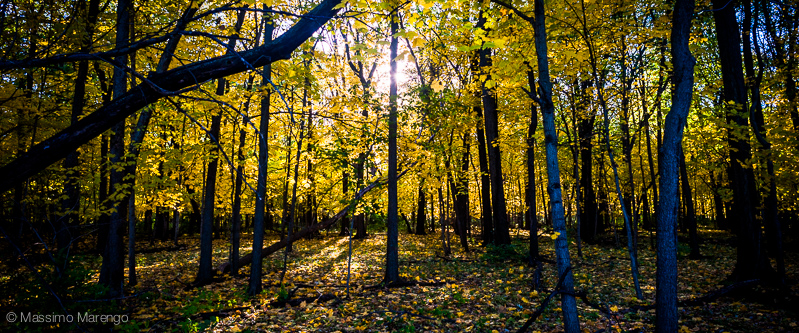
New year, new post, the first update of this blog since the last summer. The fall has come and gone: a cold November spell, with the only snow we got so far in this season, and an unusually warm December with autumnal weather through the solstice into the new year. The photo above? A snowfall from last year. This year's weather looks more like the small iphone photo below on the left.

January 1st, 2015
It is customary at the beginning of a new year to look back at the 364.242190 spins that the planet did in its last revolution around the Sun. I will refrain from that... you are welcome to go to +Massimo Marengo and read all my rants about the never ending (but very much enjoyed) new course I had to teach this semester (in summary: lots of work to prepare new classes, and not much sleep to recover between one lecture and the next), discovering how I live in the only populated place on earth that is seemingly cooling as a consequence of climate change, the continuing disappointment of a society that for each step forward in equality seems to make three step backwards in racial and economic inequality. Let's talk instead about the calendar itself, and the consequence of these 0.242190 extra days at the end of each year. 

Wishful thinking
Unless you live on a celestial body that is locked in some period resonance with some larger mass (e.g. the moon always shows the same face to Earth, hence the duration of its day is the same as the length of a month; Mercury rotates three times every two of its years), the length of the day and the length of the year are totally random. So it happens that if you want to have a calendar with an exact number of days for each year you are pretty much out of luck, because the seasons would drift by one day every fourth year, and you would soon be celebrating harvest in the middle of spring. That was the situation in antiquity, at the time Julius Cesar went to Egypt to biblically meet the queen Cleopatra. Egypt at the time was the cultural center of the Mediterranean, thanks to the famous library in Alexandria where the summa of all knowledge was kept. It was in Alexandria that Cesar consulted with the local astronomer Sosigenes, and figured out the need to add one extra day every four years to take into account the extra time that kept accumulating at the end of each year. This is how the leap years were born.

More like it
The celestial spheres, however, are indifferent to the desires of humankind, and 0.25 (one day every four year) is not the same as 0.242190. The seasons kept shifting, albeit more slowly and in the opposite way, even after the Julian calendar correction. So was the situation in the middle ages, when the calendar was again out of sync by 10 days. This was not good for the Church, since it completely messed up the complicated calculations that were used to determine the calendar date of Easter. As a result, Pope Gregorius XIII decreed that the day following October 4, 1582 was to be October 15, 1582, obliterating from existence 10 full days from the history of the world, and removing one leap year every century (but not if the century was divisible by 400). With these changes the calendar was forced to sync again with the seasons, with an accuracy better than 0.002%. Not all countries, however, adopted the Gregorian calendar right away: not everybody was very keen to follow the dictates of a Catholic pope. The orthodox Russia, for example, didn't fix their calendar until 1918: as a result, the October bolshevik revolution actually happened in November!

Moore's Memorial Park, Ames, IA (January 10, 2014)


Monday, July 21, 2014

A Tale of Foxes

Ames, IA (April 9, 2014)

Summer, in principle, is when I have more time in my hands since I am not teaching, and I can go through life at a more leisurely pace. In principle! In practice, summer is even more hectic than the teaching semesters, as you can infer from the small number of posts in this blog. Since classes have ended, I had a trip to Baltimore to give a talk on planets rising from the grave of dying stars, another trip to Boston for the meeting of the American Astronomical Society, and soon I will have a new trip to Vienna to give a talk about how those same dying stars are on a fast slimming track. And in-between all this I worked on two papers, on observing proposals, visited some collaborators in Minneapolis, monitored my graduate students, one of which graduated last week. So much for a leisurely pace! All this should explain why this post about "my" foxes had to wait until now to be written. Well, this plus my reluctance on writing about something that was still a developing drama, with uncertain end. 

Fox kits!
But let's start from the beginning. As you know we live at the edge of a small university town, just a short walk from a park that borders with undeveloped corn fields and a little forest. This park is frequented by numerous wildlife; not just the deers that Kero love to chase (if he could) but also predators like foxes and coyotes. They come out usually at sunset (presumably at early morning too, but that's not my game), and I often see them when I walk Kero at our unusual hours. Right at the entrance of the park there is a small creek collecting the neighborhood rainwater. The creek is usually left alone, and had been overgrown with bushes and tall grasses. I never paid much attention to it, except for checking on the muskrat that lives in the area, which is what I thought I saw, one evening in early April, as a shadow moving in the bushes. I pulled Kero close to me (muskrats elicits from him the same reaction that rabbits do), and started looking. What I saw were two little fox kits, and their mama checking on me while I was looking at her pups! I hushed kero and walked him home, then went back there with my camera to check if they were still there.

They were there! It was dark and I didn't want to get too close to avoid bothering them, so my photos are a little too fuzzy for my taste (if you want to see deliciously cute sharp fox photos, have a look at the work of Roeselien Raimond). Still these are my foxes, so I want to show them here. I went there a few times, and they seemed to be quite oblivious to the people passing by. Mama fox was always in the vicinity keeping an eye on them and on the people passing by, when they were out playing (always at dusk, I never saw them out during the day). I am not entirely sure how many kits there actually were: in one occasion I counted at least 5 of them out at the same time, but they could have been six. Overall it was quite a large litter, the cutest thing in the world, playing like crazy the same way dog pups do, coming in and out from the numerous holes of the rather large den that their mama dug on the side of the creek (you can have an idea of the den size in the panoramic photo at the bottom).

Playing in the grass
The problems, however, started a week or so later. The neighborhood north of the creek is prone to flooding, mainly because the drainage holes in the streets do not have enough capacity to eliminate fast enough the strong summer rain that happens in this part of the country. To solve this problem the town started digging a new drainage system, and part of the work included enlarging the pond where all this water is supposed to end, and the creek that brings the rainwater into it. The creek, yes: exactly where the fox kits had their den. One day, with horror, I noticed an excavator parked on the side of the creek and red marks all around the slope indicating the area to be excavated, that included the whole den with its occupants. That is when I met another photographer that had been visiting the kits like me, and after some brainstorming she called the city department that deals with wildlife, managed to talk with a local biologist, and succeeded in having the city stop the digging for at least two more weeks, to give time for the kits to be strong enough to move on their own without harm.

I visited the site in the following days, and they were still there, playing outside their untouched den, despite the loud noises all around the area that the heavy machinery must have been making during the day. After a week I had to leave for one of my trips, and when I came back the den seemed empty (still untouched). When they finally dug out the area for good, it seemed that there was nobody around. While I cannot be sure of what ultimately happened to the kits and their mama, I believe everything in the end went well. A few weeks later I saw a beautiful young fox with a lush fur along the path next to the creek, basking in the last rays of the sun. She looked at us, unconcerned as we approached, and then took off in the tall grass bordering the newly fashioned creek. Maybe she was prospecting for a new den, to raise the next generation of kits in the years that will come?


Playing with mama, Ames, IA (April 9, 2014)

Sunday, May 4, 2014

Magnolias from other Worlds

Magnolia flowers, Ames, IA (May 4, 2014)

More than two weeks without blogging, that's the longest stretch since I restarted this blog almost one year ago. Sometimes life gets in the way: I had to give a presentation at a meeting in Baltimore (that was last week) and it took me two weeks non-stop work to prepare the talk. Before I left Ames it was still winter, the weird out-of-season Iowan version where it is warm one day and freezing the next. Now that I am back, spring finally arrived in full force. The magnolia in front of my house is peaking, and this post is a perfect excuse to show some of the flowers that survived last week rains.

Magnolia core
The trip, and the non-stop maddening work, were worth it though: this was one of the most interesting meetings I have ever attended. The meeting was about habitable worlds across time and space and the participants were equally divided among astronomers, geologists, climate scientists and biologists. Our task was to discuss what we really know about habitable planets outside Earth, and what we need to understand to search for more planets that could host living organisms right now. The fact is, this is not an easy task. Just defining what is alive and what is inanimate matter is not a trivial effort (the best definition I heard is that "it is alive if it can die"). If I look at the magnolia flower on the left, I instinctively know it is alive. But life comes in different forms, and recognizing it may be not so easy. One speaker talked about her expeditions in Antarctica to study a brine subglacial lake that has been isolated from the surface for millions of years. You would expect that whatever was trapped into the lake when the continent froze would have died by now. Not so fast: she found lots of little bugs thriving in the salty frozen water tens of meters below the surface. Well, thriving is maybe too strong a word: to survive in such a resource deprived environment the little buggers had to slow their metabolism to a death-defying point. Each of this bacteria, on average, reproduce only once every 120 years! Slow bloomers, they are.

Magnolia petals
Earth is completely shaped by life. Even the air we breathe was made by life. Oxygen is too reactive to survive as a free gas in a planetary atmosphere: a planet left to its own devices would rapidly lose all its oxygen as everything will rapidly rust, and Earth would become as red as Mars. The original atmosphere of our planet was rich in CO2, with no O2 whatsoever. Then the bugs arrived, the first wave of them, the cyanobacteria that figured out how to use sunlight to eat CO2 and breath out oxygen. They were tireless; they produced so much oxygen that they completely inverted the ratio between CO2 and O2. This was the Great Oxygenation Event (GOE) without which we would be very small and blue (you need an oxygen metabolism to sustain complex life). But bacteria didn't stop at the GOE, they changed not just the air we breathe, but also the rocks we walk. There are 5,000 minerals on this world, and 2/3 of them would not be here if it wasn't for the presence of bacteria. Some of these minerals are the actual shells of little bugs that died and formed immense carbon-rich layers at the bottom of the oceans. Most other minerals would not have ever formed in absence of an oxygen-rich atmosphere. We literally walk and breath on a planet shaped by life.

So where does this leave us if we want to search for life on other worlds? We can precisely count on the power of life to change its own environment. We can look for the signatures of life that distinguish a world from its dead counterpart, a living breathing oxygen rich atmosphere from a dead CO2 one. A world with rocks born out of living organisms instead of dead volcanic stones. We may not find an alien magnolia in the world next door, but sooner or later we will see the incontrovertible chemical signs that there are other worlds in the stable disequilibrium that would not be possible without the wondrous action of living matter. Other Gaias are out there, waiting to meet us across the aeons of time and space.

Magnolia flowers, Ames, IA (May 4, 2014)


Sunday, April 6, 2014

The Long March of the Living Snow

Ames, Iowa (March 1, 2014)

For the last few months this blog has been roaming all around the world, with posts and stories inspired by mountaintops and valleys in four different continents. It is time to get back home; in the freezer, that is. Kero and I had our fun with the frigid winds and powdery snows but one would have thought that by now, April, winter would have let its grip go off the flat plains of Iowa. Not so, we still had a sprinkle of fresh snow on Friday morning. Not as much as in the photo above, but enough to cover with a layer of frost the dead flattened grass waiting for warmer times. It still go below freezing at night.

Snowflakes on my glove
This made me think about a story I heard on radiolab, about snow and the cleverness of life. It goes like this. Snow is made of ice crystals, like the ones in the photo on the left, borrowed from my instagrams. Ice in turn is made of water, cooled below its freezing point. The conversion of water into snow happens in the clouds which are made by floating tiny droplets of water vapor. You want to make snow? Simple, take some of this water flying in the sky, freeze it below 0ºC and voila, snow-on-demand. Well, nature is not so simple, after all. The tricky part is that, to make ice, water is not enough. You need a nucleation point around which the molecules of ice will start to self-organize in the ordered state of solid ice, from the disordered chaotic anarchy of liquid. Without a nucleation point, in fact, water can be cooled well below zero without freezing: supercooled water, like the one I mentioned a few posts ago in reference to cosmic inflation. Ice that won't freeze without a nucleating agent turns out to be a problem, however, if you want to form snow from the pure water in the clouds.

Many sorts of substances can work out as nucleating agents. The best one is ice itself: add a little crystal of ice to supercooled water or vapor, and the little H2O molecules will stop dancing in the wind, to stick just in the right place, growing the crystal like a beautifully sculptured snowflake puzzle. But what if you don't have ice to start with? Well, there are a number of chemicals that mimic the shape of ice crystals, and act as surrogate ice-nucleating points. One of them is a protein secreted by bacteria that like to live on grass. These bacteria are very common, and are found about everywhere in the world. One of their role is to help forming the frost that covers the grass in cold autumn nights, an ice-jacket that protects it from nocturnal below-freezing temperatures.

Bacteria are tiny bugs, however, and it doesn't take much to blow them away. In fact, bacteria likes to be blown away, to be carried by the wind in search of greener pastures. Some bacteria are so light that they can be blown all the way up to the sky: the jet stream is their preferred global transportation system. And that of course presents a problem: the sky is not very conducive to bacterial life, and at some point any good bacterium will need at some point to find a way back to the ground. Bacteria, however, do not have parachutes: how to get safely back to Earth from the heights of sky?

That's where the ice nucleating protein comes handy. Each bacteria in the sky, when the temperature is cold enough, will start nucleating ice around its shell, ultimately growing a large snowflake, heavy enough to precipitate to the ground, but light enough to slow down the fall. Think of this, next time its snowing: for each snowflake falling to the ground, there is a tiny bacterium finding its way home.

おかいりなさい, little bug.


Ames, Iowa (February 8, 2014)

Friday, November 1, 2013

River Valley Park

South Skunk River, Ames, Iowa (October 26, 2013)


As I have mentioned before, I live close to Squaw creek, which is a third order tributary of the Mississippi. As rivers go, Squaw creek is quite short (42 mi), so short in fact to be fully contained in just three counties. The Squaw creek never gets out of Ames, as it flows into the South Skunk river just a few miles south-east of my house. The South Skunk river is the subject of the photo above.

The Squaw creek and the South Skunk river are the reasons that Ames is criss-crossed with so many green areas. Despite their diminutive sizes, the two rivers are prone to flooding. As a result large areas within the borders of the town cannot be developed, and are reserved for public parks. The River Valley park, in particular, follows a good tract of the South Skunk river as it crosses Ames. With 4 miles of trails, it is one of my favorite places to walk with Kero. The paths follow the river for the whole length of the park, inside a thick canopy of a deciduous forest that looks stunning this time of the year. On the way back the trail border open fields, typically used for either soy or corn (hey, we are in Iowa, the alternative would be pig farms).

In winter the trails are groomed for cross country skiing, which precludes our access to the park during the skiing season. The problem with groomed trails is that Kero doesn't use skis, so if we were to go there we would be stomping on the trails ruining them for the other skiers. For this reason we go to different trails closer to my house, which nobody grooms but that I can still navigate with my larger-than-average cross country skis (pulled by my personal four-legged ski-lift). But there are hopefully several more weeks before we will get to snow time. In the meantime it is good to enjoy the colors and the haze of autumn.

River Valley Park, Ames, Iowa (October 26, 2013)


Tuesday, October 29, 2013

1000 Miles

Ames, Iowa (October 27, 2013)


Gravity
+Rurousha  linked this article about the irish naturalist Robert Lloyd Praeger, and his habit of random walking as a method to study the flora of Ireland. Walking is my favorite activity and an integral part of my photography. The description of Praeger attentive walks, where the focus is not on the destination, but on the walk itself, resembles the way I walk when I am in the "zone". My goal may be the scenic viewpoint at the end of the path, but most often than not the view waiting to be found is in the anonymous bend in the road. I never know in advance where my next photo is waiting for me. If I had not walked focused on the path, rather than the path's end, I would have missed it.

Fortunately for me, Kero also likes (demands) long everyday walks, one to two hours every day, no matter the weather or the temperature. He does slow down in Summer, as Samoyeds really don't like hot weather, but makes it up as soon as the thermometer turns downward. So we don't quite average the 1,000 miles per year recommended by the article, but we get quite close to that number. And even if we tend to go mostly in the same places (Ames is not that big) every day is different. The weather changes, the light transforms, life makes sure that every day there is something new to discover and bring back home.

Sunday, October 27, 2013

Instagram

East River Valley, Ames, IA (October 26, 2013)

During the last month I have been posting assiduously on Instagram. As you are most likely aware, Instagram is a cameraphone-centric photo hosting free site. I wrote cameraphone-centric because by far the preferred way to access and interact with the site is via their smartphone app, both for viewing and for submitting photos. Since I started using more regularly the camera on my iPhone 5s, I found myself posting photos more and more frequently on Instagram. And the experience has been quite liberating.

Let me explain. I am very careful and disciplined with my photography. I try to think ahead and shoot in a format meant for long term preservation of my images. I always shoot raw (the equivalent of digital negatives), which gives me the maximum possible dynamic range (the number of "stops" saved in the digital file) and later freedom in editing the image. I use a raw-file capable image processing software (Lightroom) that preserves intact the original data, applying reversible edits to correct for brightness, contrast, color balance and composition (crops). I strive to only do the minimal editing, not because I have something against photo manipulations, but because each step invariably degrade a little the quality of the final image. In practice I try to do to my images nothing more and nothing less than a good wet darkroom photographer would have done to transfer his or her negatives to paper.

Instagram is the opposite of all this. Cameraphones generally save their images in JPG format, which uses lossy compression algorithms (each time you save a JPG file you lose details). The Instagram smartphone app allows you to apply heavy handed "filters" and "frames" meant to reproduce the look and feel of old polaroid and toy cameras. The app by default scales the image, cropped to a square format, to 640x640 pixels. This low resolution guarantees that you will never be able to print it on paper, unless you want to restrict yourself to very small print sizes (scale it up to even the traditional size of polaroid photographs, and you will see pixels). Given all this, why did I say that my experience with Instagram has been liberating? Well, there are two main reasons. Instagrams are limited in the same way that a real-world polaroid camera (or a toy camera such as Holgas) are limited, in the fidelity in which they can reproduce the scenes they capture. Still their peculiar look-and-feel has spawned communities of photographers choosing to use those cameras as a way to express their creativity. The limitation of the medium is not a limitation in creativity, just a challenge more. The rough Instagram filters are without doubt a shortcut to more rigorous digital darkroom techniques, and a sure way to degrade the technical quality of the images, but who cares? The artistic value of an image is not necessarily equivalent to its technical perfection. Instagram is liberating because it gives you less options: with the camera working in automatic and very limited editing possibilities, you only have to think about subject and composition, which is in the end what matters.

There is however also a second reason. A common saying among photographers is that "the best camera for the job is the one that's with you": I only have my Nikon D700 camera and lenses with me when I go out purposely to take pictures. I don't carry it unless I have some expectation of spending some time dedicated to photography: I don't bring it with me every day in my walks, and often I don't even carry it in my backpack when I am going on a work trip where I expect to spend most of my waking time in meetings or working in my hotel room. My phone, however, is always with me, and it takes 10 seconds to pull it out of my pocket and shoot. And with pervasive wireless internet, less than a minute later the final Instagram is available, for the whole world to admire, on the internet.


--- Last considerations ---

I shot the small photo on the left from the same vantage point of the large photo above. The large photo was taken with my D700 camera and 24mm wide lens, and edited in Lightroom. The small photo is an Instagram taken using one of the standard Instagram filters and enhanced contrast adjustments, and no further editing. At full resolution, the details of the Instagram are clearly inferior than the D700 photo, and it won't print as well. Still the Instagram is perfectly fine for the web, and much more immediate than a D700 picture.

The Instagram image resolution issue is actually easily solved. Shoot your image with the native cameraphone app (modern cameraphone CCDs have now a pixel count comparable to semi-professional digital SLR cameras, even though the smaller sensors will generally be much noisier), and import it in Instagram later. This will save a local copy on your phone with full resolution, even though the photo transferred on the site is probably still 640x640 pixels in size. The only part of the Instagram processing that doesn't scale up to full resolution is the frame border: you will get a blurred version of a 640x640 pixmap of the border, which you will have to crop out if you want to print your Instagram.

You can see my Instagrams at: http://instagram.com/oornitorinko

Ames, Iowa (October 26, 2013)


Thursday, October 24, 2013

Duotone

Ames, Iowa (October 19, 2013)

This is not really a duotone, just a background that is half sky and half dry autumnal grass bokeh. The flower (I don't know its name) blossoms late in the Summer, and then produces this fluffy white "fur" made to disperse its seeds in the strong Iowan winter months. It is purple when blossoming, but I almost like it more in the fall, so dignified with its silver crown of hairs.

Wednesday, October 23, 2013

November Weather

Ames, Iowa (October 19, 2013)

Weather finally catched-up with us: it was snowing this morning in Iowa. Not the January snow, the one that sticks hard to the ground and you can walk on it as if it is white marble. More like the November one, the slushy snow that becomes rain as soon as it touches a surface. Any surface, be the grass, or my hand. Or the snout of a dog too eager to go out for his morning walk, oblivious of the miserable weather. Loudly dragging me outside, when I would just have stayed tucked-in for the rest of the day.

The yellow daisies in the park have long lost their petals. Their dark heads are still standing up, proud, on their thin dry stalks. They will soon wear fashionable sparkling hats. How long until autumn's golds will turn into winter's whites? 

Ames, Iowa (October 19, 2013)


Tuesday, August 27, 2013

Summer

Ames, IA (July 15, 2010)

As predicted, summer is back, with a vengeance. The last few days have been unseasonably hot, with 80% humidity leading to a heat index of 44ºC (that's 110ºF). I know somebody that likes sweltering weather like this... well that's not for me and I am ready for some nice fall weather! Do you want to exchange? This (hopefully last) heat wave comes after a relatively cold summer and a very wet spring. It kind of compensates, and is not unprecedented: in the last 125 years the thermometer rose above 100ºF in Des Moines at least six times. I guess that if the 5 previous generations living here could take it without air conditioning I should probably shut up and enjoy the the weather!

Late spring in Ames
The photos above and at the left were taken both at the Ada Hayden park in Ames. The one above was taken right in the middle of summer, when temperatures like this are more normal. The one on the left was instead taken in late spring, when the little patch of restored prairie in the park was blooming. As I mentioned before, the park is named after Ada Hayden, a botanist and conservationist that was the curator of the herbarium at my University at the beginning of the XX Century (she was also the first woman to get the Ph.D. at Iowa State). Her activity was crucial to promote the conservation of the remnants of the prairie that once occupied all the Great Plains. In 1940 the State of Iowa set aside $100 to Hayden for gasoline to drive around and identify what was left of the original prairie in the State. Thanks of her drives Iowa still has some of its original prairie. Some of these surviving patches she identified are still there, like the Hayden Prairie State Preserve in northern Iowa on the border with Minnesota.

Thursday, August 22, 2013

Prairie Restoration

Moore Memorial Park, Ames, Iowa (January 14, 2012)

I wrote before about Moore Memorial Park in Ames. The park is located vey close to my house, and is the place where I usually walk Kero in the morning. Situated on land donated to the city by Fern and Bertha Moore, the park occupies what once was a dairy farm. It is crossed by a creek meandering in between slow rolling hills.

A neat thing in the park is that a sizable portion of it is being kept as restored prairie. Tall grass prairie once occupied most of the US Great Plains, the land that was roamed by bisons and the nomadic tribes that were hunting them. Most of this prairie has now disappeared, converted into industrial farms. Illinois alone once held over 35,000 square miles of prairie: today the grand total for the state is about 3 miles of original prairie. An inland sea of grasses and forbs (most wildflowers and legumes), the prairie was a hotspot of diversity, and was crucial to preserve the fertile topsoil from erosion, store water during excessive rainfall and preserve life during droughts, temperature extremes and native insects pests. It is not by chance that, once the prairie was finally removed at the end of the XIX century, a severe drought in the '30s transformed the midwest into the Dust Bowl, when 75% of the topsoil was blown away, causing the economic collapse of the region.

How do you restore a prairie? You use the same force of nature that have acted on it for eons: fire. Prairie grasses and forbs are adapted to the periodic fires that naturally swept the prairie, by having deep root systems that can survive a grass fire. Other invasive species (including bushes and trees) are not. By applying periodic burns (every few years), one can selectively remove the invasive species making space for the native plants (and naturally fertilizing the soil in the process). At every passage the fraction of native, fire resistant, plants will increase, until the ecosystem is restored to a status as close as possible to the native grassland. The photo above was taken in the middle of winter (two years ago, when unfortunately we didn't have much snow at all, prelude to a severe drought during the summer). As you can see all the grass is very dry, perfect fuel for fires triggered by chance lightening. Or by the park caretakers, that at the beginning of spring walk around yielding flame throwers, setting everything on fire, to let a renewed prairie emerge from the ashes.

Thursday, August 15, 2013

Where is my Summer?

Ames, IA (July 28, 2013)

Unicorn Golden Bee
My father was commenting today that the temperatures in Italy (he lives in a small village in the Alps) are now unusually low (15ºC = 60ºF last night), for being close to "Ferragosto" (15 of August), and that the summer must be ending. If that's the case then summer in Iowa is also a goner: our minimum temperature yesterday night was below 12ºC (54ºF). Is this unusual? Well, it is a little on the cold side but it is not unprecedented (record minimum cold temperature in August according to Wikipedia has been 4ºC = 40ºF) and I would not be surprised if we get more hot sweltering weather (35ºC at night with 80% humidity) before the end of the month. So, where is it global warming when you need it? Well that's about the climate, not the weather. What is steadily increasing is the global average, and to see that you need to average over a sufficient number of years. Blaming individual data points (the weather here and today) to climate change is a little tricky: local weather does what it wants. In fact one of the consequences of climate change is precisely to increase the local variability: put more energy in the system and it will move out of equilibrium, enhancing its oscillations around a slowly increasing average. So, don't trust somebody saying that global warming must have stopped because today is cold: that's not what climate change is responsible for. On a separate note, I can officially announce the discovery that unicorns exist! They are golden and they fly, indeed. 

Wednesday, August 14, 2013

Celestial Poo

Ames, IA (July 27, 2013)

Since we are talking about bugs, I found this interesting news in yesterday rss feeds. Catholics parishioners in Fresno, California, made it to the news when they claimed that a tree next to their church was crying. Now, weeping statues are quite common in catholic lore, but a crying tree seemed to me quite a novelty. According to the parishioners, the tree started crying when a parishioner asked for a miracle to cure her illness. Since then the tree is allegedly crying in sync with the worshipper's prayers. Now, where are the bugs in this story, you may ask? Well, it turns out that what is dropping from the tree are not exactly tears, but actual droppings, from aphids secreting a sugar-rich sticky liquid (honeydew) as they feed on the plant's sap. In the right season, when there are enough aphids, the amount of honeydew they secrete is massive enough that it can indeed resemble as if their tree is crying. Although some of the parishioners are well aware of the physical explanation for the phenomenon, they still believe it is a miracle, which they see in how the tree started "crying" exactly when a miracle was pleaded. I guess an entomologist's poo can as well be worshippers' tears!

This is not at all surprising. All myths find their origin in some natural phenomena. Myths are created as part of the human drive to explain the world, when the actual cause of phenomena is beyond our immediate understanding. Our brain is tuned to see patterns (especial faces), even when there is no pattern: better err on the safe side seeing a leopard where there are only shadows, than missing the predator and ending up as its lunch. So we tend to develop fantastic stories to explain the extraordinary facts of everyday life, building in the process the sacred and profane mythology that so much permeates all human cultures. There is actually nothing wrong with that: those myths are what make human cultures interesting, regardless to their very mundane origin. I still enjoy reading Garcia-Marquez "One hundred years of solitude" even though I know that his magic realism is nothing else than his grandmother tales. Myths are what give depths to the soul of human cultures. They enrich us. Provided, of course, that they don't get into the way in our decision making when, being a naturalistic explanation available, we need to get past our myths to be able to make informed decisions about our future.

Saturday, August 10, 2013

More Bugs

Ames, IA (Aug 4, 2013)

Every time I step into my garden with the camera and macro lens I find some new kind of bug that I didn't notice before. Take the butterfly above, for example. I have no idea of her name (I mean the species) and in fact when I saw her from a distance it didn't look like much. But then close up it is quite interesting, almost as airy as a moth, but diurnal as any other butterfly visiting my flowers during the day. Flowers that are still suffering from the japanese invasion, btw (you can see some of the petals all munched up by the green monster that are raiding my garden).

Another bee
I also saw more bees. Felt actually. Yesterday, just before sunset, I was in the garden cleaning up the roses from the japanese beetles (that's what they seem to like most these days). Since they clump by the dozens on single flowers, I found that the best way to get rid of them is to grab the entire infested flowers in my hand, and then unceremoniously dispose of the whole thing. Well I learned that there is a reason why gardeners use gardener's gloves while doing this kind of things: one of the flower was hosting not just beetles but also a nice bee like the one in the photo of the left. Not a honey bee, again, but still a bee with sting and all. Of course she was not happy in finding herself in my closed hand, and she rapidly found a very effective way of persuading me to let her free. Fortunately she didn't left her sting implanted in my fingers. Fortunately for me as the pain didn't last more than 5 minutes, but also for her, since she would have died if her sting had gotten stuck in my finger. Still it wasn't entirely pleasant. Anyway, I guess I learned my lesson: look at your bugs before getting too close.

Sunday, August 4, 2013

Monsters from Outer Space

Tentacled Alien Monster in Ames, IA (Aug 4, 2013)

The other night, when I was writing about the green monsters infestation in my garden, it came to my mind how common is our fascination with monsters. It is something that can be found in any culture, and at any time. It doesn't matter what we believe and what we know, there is always a corner of our mind where the shadow lurks, ready to conjure some supernatural being as an explanation to something we cannot explain otherwise. Many of these monsters have a base in reality, but become larger and more mysterious, magical, terrifying as their story gets repeated and recreated from mouth to ear to a new mouth. As strange and alien as they may seem, though, these monsters are nothing else than the projection of our minds. As such they retain the familiarity of our experience, fear, emotions. This familiarity makes them less alien, in the end. They are part of us.

I was thinking of this as I was watching the trailer of "The Europa Report", a science fiction movie that came out in the last few days. I still didn't see the movie, so don't worry, you won't find here any spoiler, just speculations. The movie tells the story of a mission to Europa, one of the four main moons of Jupiter. Europa is a world of ice and fire. It is close enough to Jupiter than its core is heated by tidal effects, but far enough that this internal heat is not sufficient to keep its surface above water's freezing temperature. The result is that Europa is covered by a thick crust of ice, under which it is believed to exist a vast ocean of liquid water, possibly rich of mineral and oxygen brought up by its underwater vulcanism powered by its tidal heat. The conditions on Europa may be, in fact, quite similar to the conditions that are found on Earth at the bottom of our oceans. These are conditions where life can exist, which is something that makes Europa the grand prize of planetary exploration, the best site where we can look for extraterrestrial life. Genuine alien monsters. Without having watched the movie, I don't know if the crew landing on that moon and penetrating the ice will find anything alive. I wish one day we could put together enough resources and technology to go and see for real. By judging at the resilience of life on every nook and cranny on Earth's surface, oceans and rocks, I am led to believe that the emergence of life is something as inevitable as sunset being followed by sunrise. But we really don't know, because we have only one example to refer to (Earth) and a statistics of one doesn't really count.

The question however remains: if we will find life outside our planet, will it be monsters ready to pounce on us, eat us, or use us as incubators for their larvae like the monsters in the Alien movie series? I seriously doubt that. The building blocks of all life on Earth are proteins, and proteins are made with smaller blocks called amino acids. All eukaryote cells (cells like the one in animals and plants) are mades with just 21 different amino acids. These 21 amino acids are however just a small portion of all possible known amino acids, In fact we know how to build about 500 different amino acids using the same basic arrangement of atoms of the 21 used by eukaryote life. Not only that, but each amino acid can exist in two symmetric forms (left- or right-handed): all eukaryote life uses the left-handed form of these 21 amino acids. This is not entirely surprising, as all life on Earth has evolved from a common ancestor, starting from the same building blocks. An effective ecosystem requires its members to be able to eat each other which has preserved the need of using the same set of chemicals through all different species. The end result is that life on Earth is remarkable homogeneous.

A bee in my garden!
This doesn't mean, however, that the same evolutionary solution must be found every time that life emerges. This is what worked and survived on Earth, with the specific challenges of Earth environment through the ages. Life on Europa, Mars on any other exoplanet of exomoon will likely find different challenges and different environments, so the evolutionary result may be quite different than our 21 left-handed amino acids. They may use any of the other 500 amino acids to make proteins. They may be right-handed. And if this is the case, I doubt that we will find monsters ready to devour us to satiate their infinite hunger for human flesh: our meat will likely be like poison for them, evolved to prey on different chemicals in a different ecological niche. That doesn't mean, of course, that the Europa Report movie, even if it manages to be scientifically correct (local aliens not really interested in eating us) will be a boring flick without monsters. Ghosts scare people to death even if they cannot touch them. Sharks sometime attack people even if human meat is not of a good taste for them: sharks usually bite people when they are provoked, or when they confuse swimmers for seals, and spit after biting (not that this is of much consolation for the person that is bitten). Alien monsters may provide the thrill for a successful sci-fi movie even if they cannot successfully eat us!

The alien-tentacled-monster above is just the stamen filaments of a flower in my garden: not very alien and not very monstrous. But monsters exists in our mind, so we can see them anywhere. Also, there is something else I found today in my garden: a bee! See photographic proof on the left. Not a run-of-the-mill western honey bee, but a bee nevertheless. There is still hope.

Jupiter, Europa, Ganymede and Callisto as photographed by my students last fall

Thursday, August 1, 2013

This is Not a Bee

Ames, Iowa (Jul 27, 2013)

It is not the image of a bee either. It is some kind of bumblebee. The fact is, I have not seen a regular honeybee in my garden for years, now. They seem to have all but disappeared. In fact, they have.

The Colony Collapse Disorder is sending our friends the bees the same way of the dodo. It is not clear what is causing the disease, but it is capable to suddenly wipe out entire colonies (Pennsilvania lost 53% of its honeybee colonies in the 1995-96 season alone). This is an insect that is crucial for us: not just for the honey they produce, but because they are our main pollinator insect. For some species of flowering plants, the only pollinator. No bees, no fruit. It is estimated that bees pollination is responsible for more than $15 billion in increased crop value each year. And bees are disappearing at an alarming rate. While it is not entirely clear what is happening, recent research suggests that the culprit could be a class of pesticide, nicotinoids, that affect bees by lowering their immune response and affecting their homing abilities. These pesticides have been recently banned in some european states in an effort to try saving their colonies.

Monday, July 29, 2013

Monsters from Across the Pacific

Ames, Iowa (July 28, 2013)

I am not talking about a certain summer blockbuster movie where alien monsters surface from a portal at the bottom of the Pacific Ocean. The alien monsters I am referring to come from all the way from across the ocean. They didn't arrive through an interdimensional portal, but most likely hitched a ride on a regular boat. Their size is quite diminutive, but their shiny armor is impressive anyway. They are the only thing from Japan that I genuinely hate: Popillia Japonica, or the Japanese Beetle!

The beast is in fact quite small (15 mm max, the photo above is a macro enlargement), but the small size does not make it less of a threat. As the name suggest, it is native to Japan, where it is just another cute bug whose population is controlled by natural predators. Not so in the US, where those predators are absent, making the popillia japonica a terrible pest. Probably introduced with a shipment of irises before 1912 (before routine inspections of imported commodities began), it is gradually taking over the whole continent. Four years ago, when we arrived in Iowa, I remember noticing just a few of them. In the last two years their number has grown so much that my garden is repeatedly invaded by hordes that have completely annihilated my favorite daisy flower-bed, and decimated the remaining ones. The beast acts by skeletonizing the leaves of the victimized plant (you know, artistically eating all the green stuff leaving only the network of dead capillaries). Well, despite the colder than usual weather of this summer, my roses are already starting to be skeletonized. If this was not enough, even in the larva stage they are a menace, as they eat the roots of the grass, leaving large dead patches in the lawn. I really hate them.

As I mentioned before, in the US there isn't much in terms of natural predators capable of dealing with this calamity. Stink bugs and blue wings wasp kill Japanese Beetles, but there isn't enough of them around to stop the invasion, by the hundreds, that reach my garden every day. I don't want to spray pesticide near my tomatoes (or where our dog can play), so chemical warfare is not an option. Biological warfare has some limited effect (the larvae can be killed by fungal spore dispersed in the turf), but to work effectively it would need to be applied to the entire town (otherwise I would just be getting the beetles born in my neighbors lawn). Traps with pheromone baits attract more of them than they can catch. In the end, the most effective way of getting rid of this menace is to pluck the monsters one by one from the victimized plants, smash them in minute fragments and scatter their assorted body parts all around the infested area. Gross, yeah, but it seems to teach them the lesson: don't mess with my garden!

PS: no Japanese beetles were harmed to make the photo above. I actually took pity of the bug, and didn't have the heart to squash it after seeing it straight in its multi-faceted eyes. After taking the photo I just picked it up, and freed across the street.